
If you’ve had trouble accessing complex treatment under Canada’s federal dental care plan, you’re not alone.
Health Canada told Daily Hive that more than half of preauthorization requests for complex dental work under the Canadian Dental Care Plan (CDCP) are being denied.
The CDCP was launched in 2023 and aims to make dental care more accessible for those without dental insurance. To qualify, you must be a Canadian resident who doesn’t have access to dental insurance. You and your spouse or common-law partner must have filed your tax returns in Canada, and your family’s net income must be less than $90,000.
Between May 1, 2024, and June 30, 2025, 5.2 million Canadians were approved for coverage, and more than 2.2 million people received care under the CDCP, according to Health Canada. Although most treatments don’t require preauthorization, more complex procedures — about one per cent — still do.
Examples of complex dental work include crowns, major surgical procedures, root canal retreatments, specialist examinations, general anesthesia, and removable partial dentures, as well as overdentures and immediate dentures.
Pixel-Shot/Shutterstock
As of July 4, 52 per cent of preauthorization requests for complex dental work were denied, a Health Canada representative informed us. However, he noted that those numbers include incomplete submissions. Without incomplete submissions, the rejection rate drops to 38 per cent.
“Common reasons for denial are incomplete submission, the patient’s needs not meeting the clinical criteria for coverage, the request being a duplicate submission that was already approved previously, or the service requested not being eligible under the plan,” explained Mark Johnson, spokesperson for Health Canada and the Public Health Agency of Canada.
He added that if preauthorization coverage is denied and the oral health provider has additional or new clinical information they want the CDCP to consider, “the provider may submit a request for reconsideration with the additional or new supporting clinical information or documentation.”
Johnson stated that, following the backlogs experienced in November, CDCP has made significant progress; as of July 11, 80 per cent of preauthorization requests are processed within seven days.

Roman Zaiets/Shutterstock
Although Health Canada has addressed the backlog for preauthorizations, the CDCP has drawn criticism.
Andrew Ostro, co-founder of PolicyMe, said that the CDCP rollout has been confusing for both patients and providers.
“We’ve heard from people who thought they qualified, only to be denied. Others aren’t sure if they should drop private coverage to become eligible,” he said.
“There’s also limited clarity about what procedures are fully covered and what costs patients are still responsible for. This confusion undermines trust in the program and makes it harder for people to make smart decisions about their dental care.”
He added that employers might even “preemptively cut dental benefits, assuming the CDCP will fill the gap, which it doesn’t.”
He added that the CDCP eligibility requirements are far too rigid, instantly excluding Canadians with private dental insurance.
“The CDCP has good intentions, but until it becomes more inclusive, generous, and better
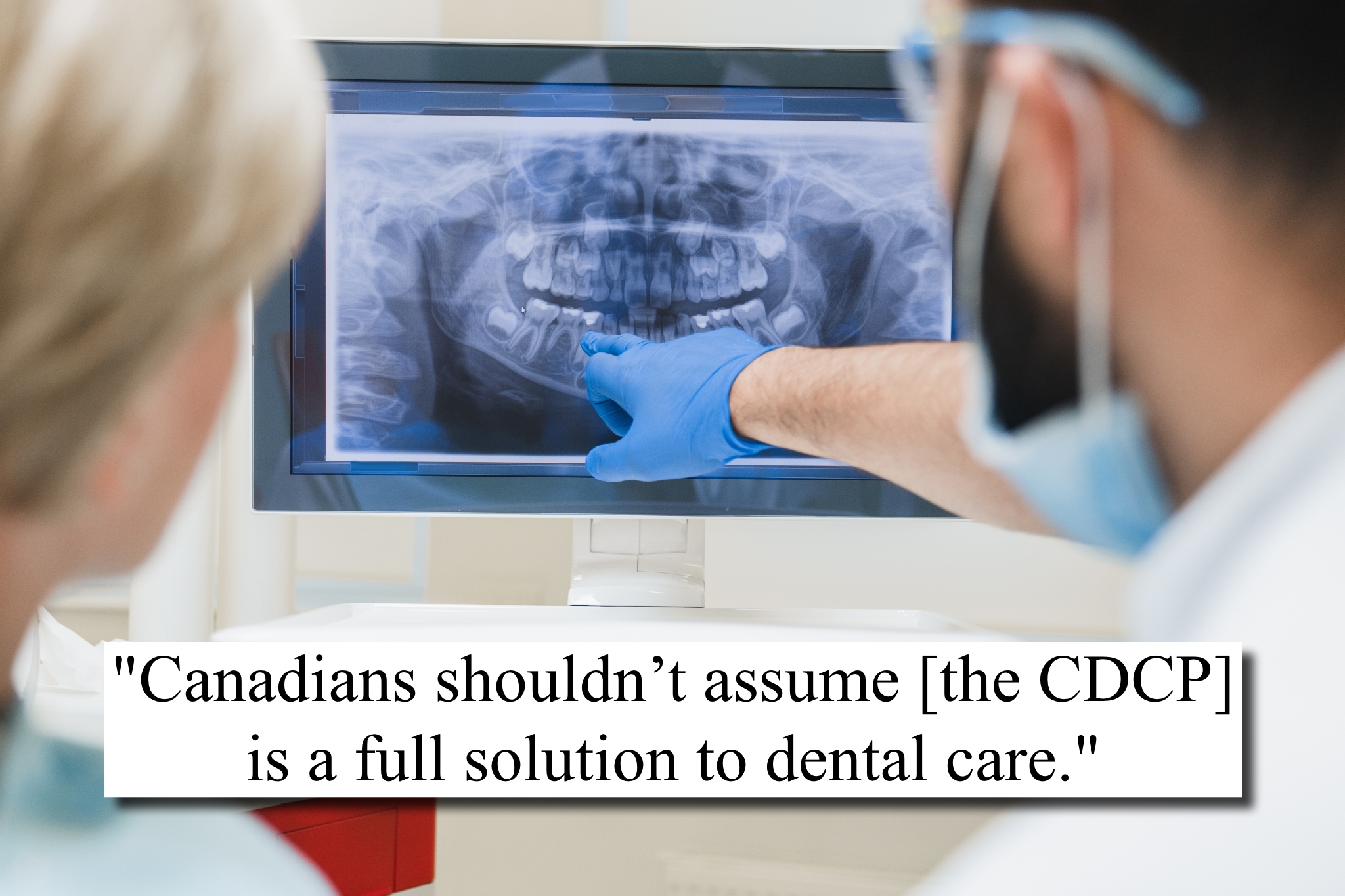
aligned with real-world costs, Canadians shouldn’t assume it’s a full solution to dental care,” said Ostro.
What has your experience with CDCP been like? Let us know in the comments or email us at [email protected]
link